
Wintering on the Costa Tropical is a good idea if you're after the same mild climate as the Costa del Sol but with smaller towns and a landscape of fertile valleys, avocado groves and mountains that run down to the sea. Almuñécar, Salobreña and Motril are between 30 and 46 km from Torrox-Costa, so you can get to know them on day trips without breaking camp. For a stay of two or three months, the practical approach is to have a fixed base with facilities and get around from there.
The Costa Tropical is the coastline of the province of Granada, between the eastern Costa del Sol (Málaga's Axarquía) and the coast of Almería. The Sierra de Almijara, the Sierra de Lújar and Sierra Nevada shelter it from cold northerly winds, which is why cherimoyas, mangoes and avocados are grown here, something quite unusual in Europe. In this article we tell you what each town offers in winter, where you can stay and how to combine it with a long stay in Torrox.
Why winter on the Costa Tropical
The Granada Tourist Board describes Almuñécar as having winter temperatures that don't drop below 16 degrees, and Salobreña as having an annual average of around 20 degrees. These are brochure figures, but they match the experience of those who spend the colder months here: cool mornings, short-sleeve middays and few rainy days in a row.
- Mild climate: winters are mild and sunny, ideal for walking, cycling or eating on a terrace in January.
- Seasonal tropical fruit: cherimoyas are harvested in autumn and winter, and at the markets you'll see local avocados and mangoes.
- Towns that are lively all year: Motril has around 60,000 inhabitants, and Almuñécar and Salobreña don't empty out outside summer.
- Mountains in view: on clear days you can see the snow-capped peaks of Sierra Nevada from the port of Motril.
If you're comparing areas, our guide to wintering in a motorhome in southern Spain shows how the Costa Tropical stacks up against Almería, Murcia or the Costa de la Luz.
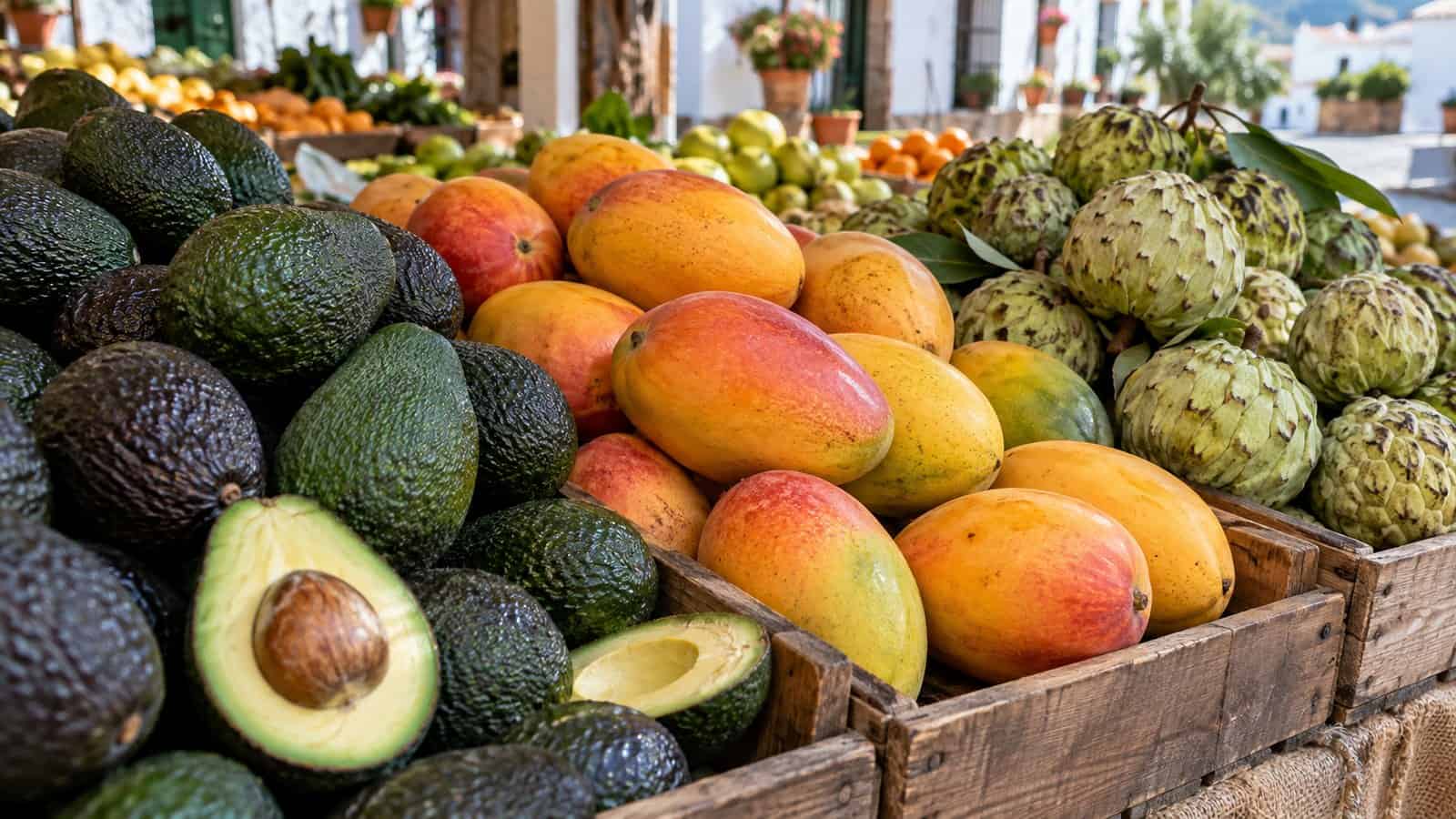
Tropical fruit, the area's hallmark
The name Costa Tropical isn't just marketing. According to the Granada Tourist Board, the climate has allowed tropical fruit to be grown here for a century. The cherimoya even has its own designation of origin, Chirimoya de la Costa Tropical de Granada-Málaga, which mainly covers the Fino de Jete variety and has its regulatory council in Almuñécar.
For motorhomers spending the winter, this translates into something very tangible: good, cheap fruit at markets and roadside stalls, and a local cuisine that uses it in desserts such as cherimoya mousse or mango tarts. In the Motril valley you can still see traces of sugar cane, the crop that made the area rich for centuries.
Almuñécar: Phoenician history and 26 beaches

Almuñécar is the most touristy town on the Costa Tropical and the closest to Torrox, about 30 km away. It has 19 km of coastline spread over 26 beaches, from the town beach of Puerta del Mar to coves such as Cantarriján, at the foot of a ravine, or the bay of La Herradura, known for its diving.
Its history begins with the Phoenician colony of Sexi, and you notice it as you stroll around:
- Castillo de San Miguel: a Moorish fortress on the hill overlooking the centre; inside is the Town History Museum.
- Cueva de Siete Palacios: a vaulted Roman structure that houses the Archaeological Museum.
- Fish-salting factory and Roman aqueduct: remains from the time when Sexi lived off salting fish.
- Church of La Encarnación and the Pilar de la Calle Real, in the old town.
For days out in the countryside, the Peña Escrita Ecological Complex, at about 1,100 metres, offers views towards Sierra Nevada and hiking and mountain-bike trails. The road up is narrow, so it's best to go by car or in a small campervan.
Salobreña: the white town on the rock
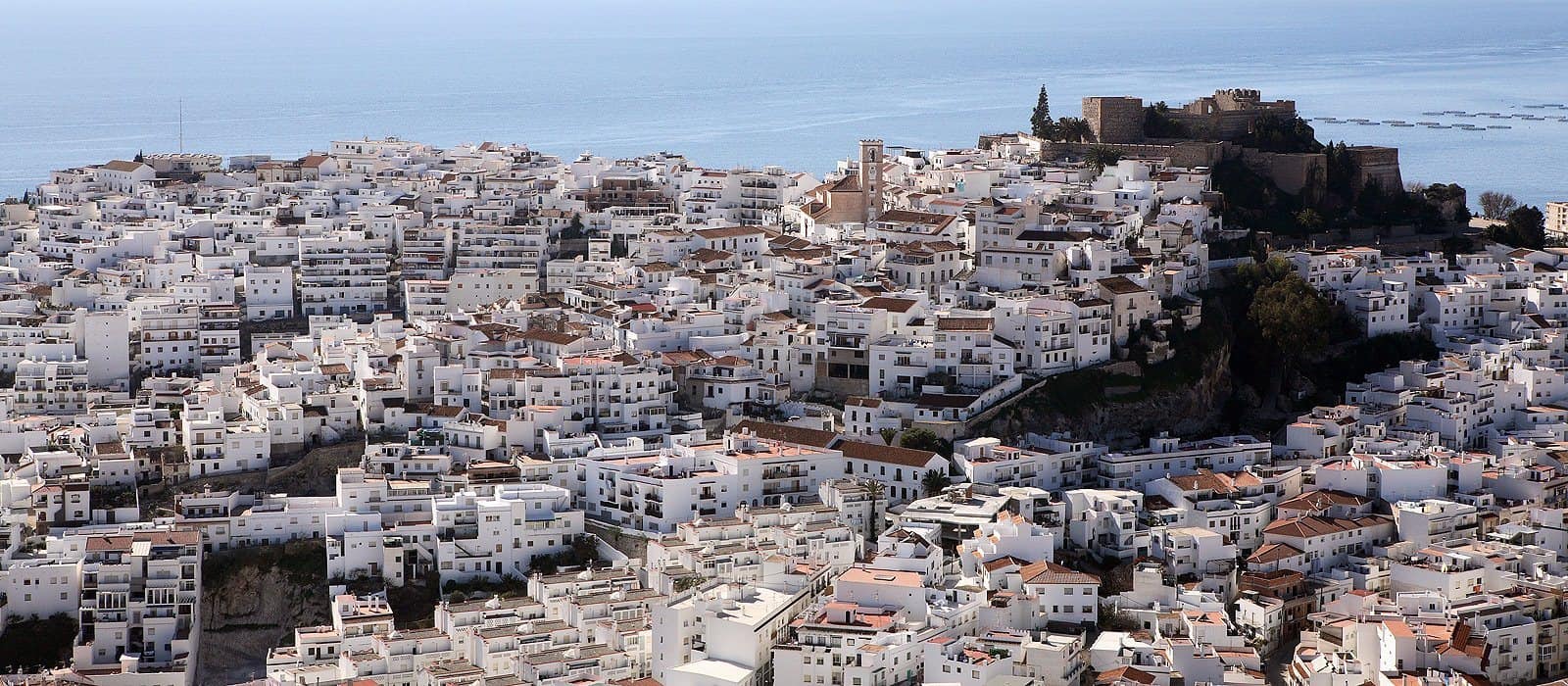
Salobreña is the most recognisable postcard view of the Costa Tropical: a cluster of white houses perched on a rock, with the Moorish castle at the top and the green valley all around. Its old town keeps the layout of narrow streets, passageways and whitewashed houses from the Nasrid period, with quarters such as La Loma, La Fuente, El Brocal and El Albaicín.
It's well worth climbing up to the Moorish Castle, seeing the Iglesia del Rosario and taking in the views from the Gambullón viewpoints. The Municipal Tourist Office runs guided tours of the town and the valley, with sugar cane fields and tropical trees. Down below, the seafront promenade and beaches such as La Caleta and Playa del Peñón are perfect for winter walks.
A practical tip: don't try to drive up into the old town in your motorhome. The streets are very narrow and steep. Park down below, near the promenade, and walk up.
Motril: port, valley and Playa Granada
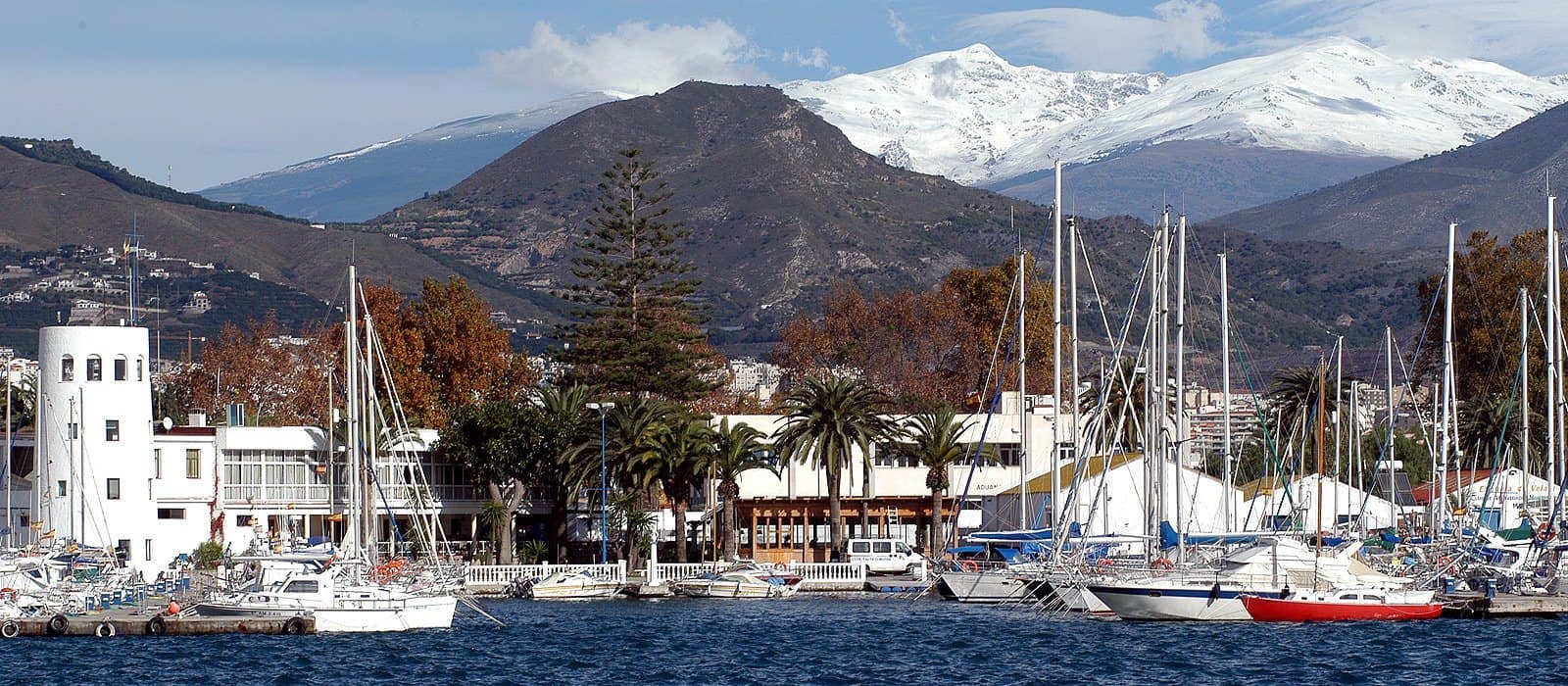
Motril is the second-largest city in the province of Granada and the one with the most services: large retail parks, garages, and a commercial and fishing port. That's useful to know on a long stay, because you can sort out almost anything here.
- Museo Preindustrial de la Caña de Azúcar, in the Casa de la Palma, to understand the valley's sugar-making history.
- Iglesia Mayor de la Encarnación (1502), the oldest known building in the city, and the Teatro Calderón.
- Playa Granada, with the 18-hole Los Moriscos golf course.
- Calahonda and Carchuna, former fishing villages with quiet beaches and the Castillo de Carchuna.
Motril is also Granada's main fishing port. Ask for quisquillas (small shrimps), white prawns, dried octopus or a moraga of sardines, and try the torta real, the local sweet.
The three towns at a glance
| Village | From Milucar (by car) | Best in winter | By motorhome |
|---|---|---|---|
| Almuñécar | About 30 km / 30 min | Castillo de San Miguel, museums, walks and coves | Narrow centre; park on the outskirts or by the promenade |
| Salobreña | About 40 km / 40 min | Moorish castle, old town, valley | Old town impossible; leave the vehicle down below |
| Motril | About 46 km / 40 min | Sugar cane museum, port, Playa Granada | Flat city with more room to park |
Where to stay for the winter on the Costa Tropical
On the Costa Tropical itself there are few motorhome aires and a handful of campsites. For example, Camping La Herradura, right on the beach in Almuñécar, advertises long-stay discounts in low season, and in Motril there's Camping Playa Granada. Before you go, check opening dates and conditions directly with each site, as they change from year to year.
The other option is to stay just across the provincial border, in the Axarquía, and treat the Costa Tropical as a day trip. Many motorhomers do just that: one place with all the facilities for the whole winter and day trips to see Almuñécar, Salobreña or Motril.
Overnighting outside aires and campsites
In winter you'll see motorhomes parked next to some beaches, but each town council decides where you can park and the rules vary from one town to the next. Always check the signs and the local by-laws before staying the night, and don't put out awnings, tables or levelling blocks outside an aire or campsite.
From Milucar: getting to the Costa Tropical
Milucar is in Torrox-Costa, on the N-340, a few minutes from exit 940 of the A-7. From here you have two ways to visit the Costa Tropical:
- By motorhome or car: take the A-7 towards Almería and you'll reach Almuñécar in about 30 minutes, Salobreña in about 40 and Motril in about 40–45. In a large motorhome allow a few extra minutes, as the motorway has sections with tunnels and gradients.
- By bus: ALSA runs services from Torrox-Costa to Almuñécar and Motril. The bus stops right outside Milucar on the coast road, and you can also catch it at Torrox-Costa bus station. Check timetables and stops on the website of ALSA.
A day trip that works well: set off early for Salobreña, climb up to the castle before the sun gets strong, head down for a fish lunch in Motril or Calahonda and come back via Almuñécar for a stroll at sunset. It's just over 100 km in total.
Milucar as your winter base
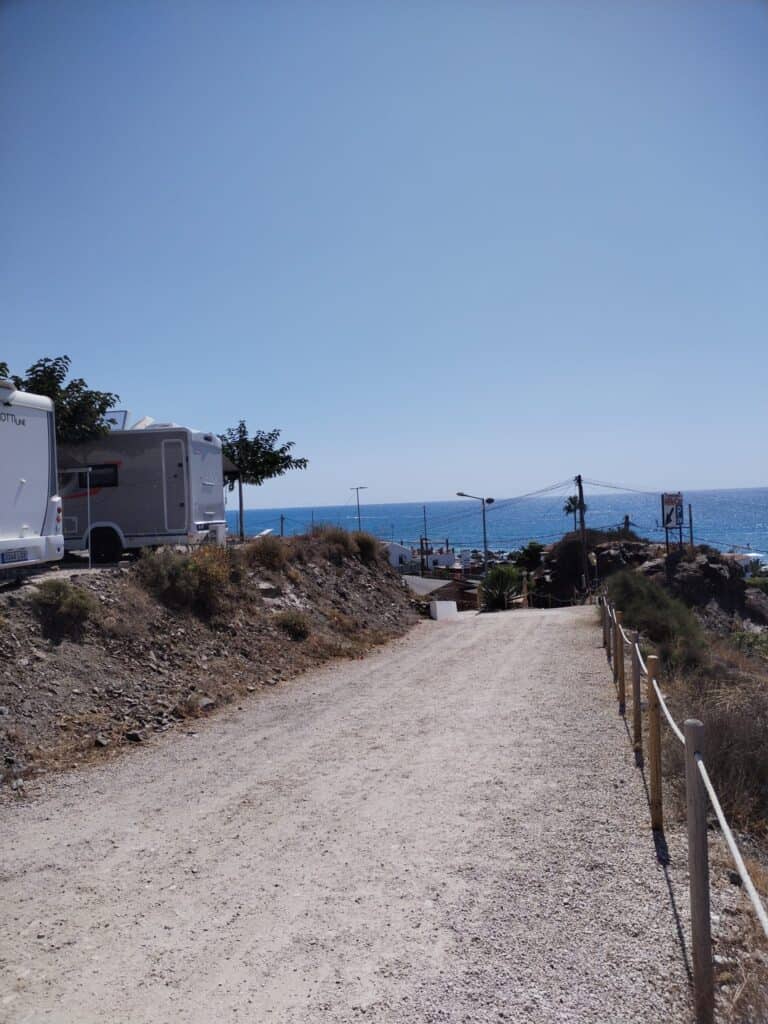
Milucar is a motorhome aire less than 100 metres from the beach, open 365 days a year and run by Marcelle and Martijn, a family who live in Torrox-Costa. For the winter it has everything you need for a long stay:
- Pitches of about 50 m² on gravel, XL pitches for vehicles up to about 12 m and front-row “Balcón” pitches with their own water and drainage.
- Metered 16 A electricity: you pay for what you use (bring your own cable with a CEE plug).
- Wi-Fi included, professional washing machine and dryer, showers and a service point for emptying and filling up.
- Fenced site with barrier and cameras, a small supermarket 400 m away and large ones less than 2 km away.
In low season there's a discount from 30 nights; see our rates. If you'd like to know how a stay of several months works, we explain it in long stays at Milucar.
Frequently asked questions
Which towns make up the Costa Tropical?
It's the coast of the province of Granada. The main towns are Almuñécar (with La Herradura), Salobreña and Motril (with Calahonda and Carchuna), and further east there are smaller villages such as Gualchos-Castell de Ferro.
Is it cold in winter on the Costa Tropical?
Not much. The mountains to the north hold back the cold wind and daytime temperatures are usually pleasant even in January. Nights are cool, so it's a good idea to have heating in your motorhome or an electric hook-up.
Can you drive up to Salobreña in a motorhome?
Not into the old town: the streets are narrow and very steep. The sensible thing is to park down below, near the seafront promenade, and walk up to the castle.
When is cherimoya season?
Costa Tropical cherimoyas are harvested in autumn and winter, just when motorhomers arrive to spend the winter. They're easy to find at markets and greengrocers in Almuñécar, Motril and the Axarquía.
Can I visit the Costa Tropical from Torrox without moving my motorhome?
Yes. Almuñécar is about 30 minutes away and Motril about 40, and there are ALSA buses from Torrox-Costa. At Milucar, the bus stops on the coast road right outside.
If you'd like to spend the winter with the Costa Tropical half an hour away and the beach less than 100 metres away, book your pitch at Milucar and plan your day trips from Torrox-Costa at your own pace.
 English (UK)
 Español
 Deutsch
 Nederlands
 Français