
For overwintering in Spain in a motorhome, the mildest areas are Andalusia's Mediterranean coast (the Costa del Sol and Almería), followed by the Murcia coast and the Costa Blanca. In January, Málaga, Almería and Alicante reach an average high of around 17 °C and nights rarely drop below 6-9 °C, according to AEMET's climate data. What changes from one area to another is the rain, the wind, the atmosphere and how easy it is to find somewhere to stay for several months.
Here's an honest comparison, with official data, to help you decide where to spend the winter with your motorhome. We see it every year from Torrox-Costa: from November to March, motorhomes arrive from Germany, the Netherlands, France and Belgium looking for the same things: sunshine, mild temperatures and a comfortable base.
What to look at before choosing where to overwinter
The midday high is misleading. Almost the whole southern coast reaches 16-17 °C in January; the real difference lies in other details:
- The minimum temperature. It's what decides whether you put the heating on every night or only some nights. By the sea, nights are milder than a few kilometres inland.
- Rainy days. A winter with three rainy days a month is not the same as one with seven or eight.
- The wind. On Cádiz's Atlantic coast and along some stretches of Almería it blows hard on many days, and you notice it in a motorhome.
- Services open all year. Supermarkets, public transport, a doctor, a launderette and somewhere to empty and fill up with water without driving around.
- Local rules. Each town council regulates parking on its streets, and enforcement is stricter during the overwintering season.
- The atmosphere. Some people want a lively city, others prefer a quiet town with a seafront promenade and an unhurried pace.
January climate compared: AEMET data
The table shows the normal January values (1981-2010 period) from the most representative AEMET weather stations in each area. The Murcia station is in the city, inland, and Granada is included as a contrast so you can see the difference between the coast and inland.
| AEMET station | Avg. high | Avg. low | Rainfall (mm) | Rainy days | Hours of sunshine |
|---|---|---|---|---|---|
| Málaga airport | 16.8 °C | 7.4 °C | 69 | 5,8 | 180 |
| Almería airport | 16.9 °C | 8.3 °C | 24 | 2,9 | 194 |
| Alicante | 17.0 °C | 6.3 °C | 23 | 3,6 | 181 |
| Murcia (city) | 16.6 °C | 4.7 °C | 27 | 3,8 | 189 |
| Cádiz | 16.0 °C | 9.4 °C | 69 | 6,9 | 184 |
| Huelva | 16.2 °C | 5.9 °C | 71 | 7,1 | 165 |
| Granada airport (inland) | 13.0 °C | 0.0 °C | 42 | 5,6 | 168 |
Rainy days = days with at least 1 mm. Source: AEMET, normal climate values.

What the table tells you: Almería is the driest and sunniest; Málaga and Cádiz have the mildest nights but more rainy days; Alicante and Murcia are dry, although the nights are cooler. And inland, even though Granada is only an hour and a half away, is another world: half the month with frost in January.
Area by area: where to overwinter in Spain in a motorhome
Eastern Costa del Sol (Axarquía)
It's the stretch of Málaga between Rincón de la Victoria and Nerja, with Torrox, Torre del Mar and Algarrobo in between. It has the mountains behind it, towns that are lively all year round and flat promenades for walking or cycling. The climate is Málaga's: mild winters, with the rain concentrated on a few days between November and February.
Its strong point is the mix: the beach every day and, 20-30 minutes away, white mountain villages such as Frigiliana and Cómpeta, plus hiking trails. If the area appeals, our guide what to see in Torrox covers the basics of the town and the coast.
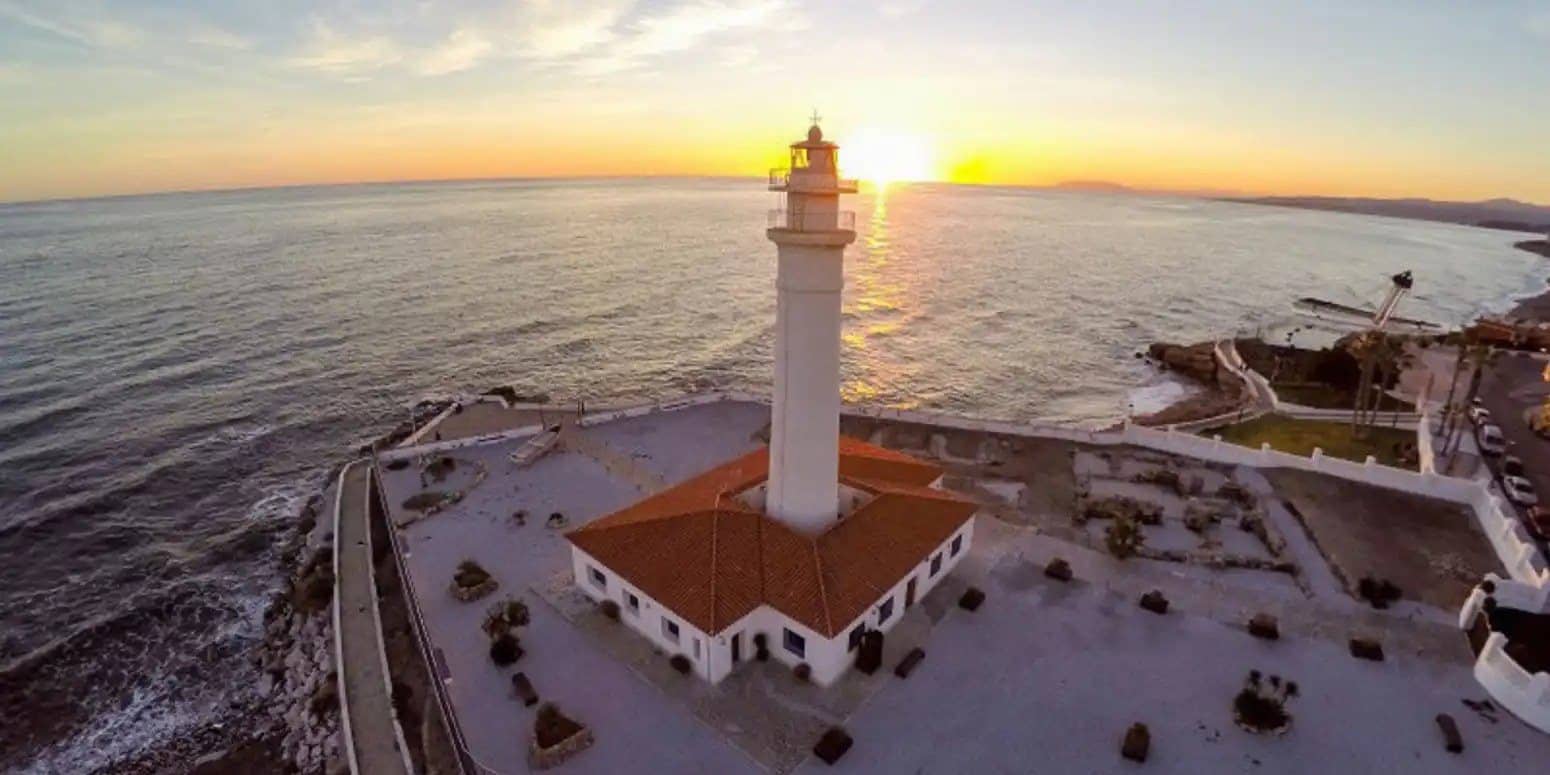
Málaga and the western Costa del Sol
From Málaga city to Estepona: more city, more services, an airport and a commuter train. On the other hand, more traffic, more development and less room for a large motorhome. To overwinter here, it pays to know in advance where you're going to sleep; in motorhome areas in Málaga we compare the options across the province.
Costa Tropical (Granada)
Almuñécar, Salobreña and Motril are 30-45 minutes east of Torrox. It's a coast of cliffs and coves, with little flat land by the sea, and the climate is similar to the Axarquía's. Many motorhomers explore it on day trips from a base on the eastern Costa del Sol.
Almería
The driest option: about 200 mm of rain a year at the airport, compared with over 500 in Málaga, and almost 3,000 hours of sunshine. The Cabo de Gata-Níjar Natural Park has volcanic landscapes and unspoilt beaches, but it's a protected area and you have to sleep at authorised aires or campsites. Against it: the wind and a more arid landscape, which some people love and others tire of.

Murcia coast
Mazarrón and Águilas are classic European overwintering spots. AEMET's Murcia station is in the city, inland, which is why its January lows (4.7 °C) are lower than what you'll get by the sea. It's a dry area and very quiet outside summer.
Costa Blanca (Alicante)
Benidorm, Torrevieja and the Alicante coast welcome lots of motorhomes in winter. It doesn't rain much, but being further north the nights are a little colder than in Málaga or Almería. If you're coming from central Europe, it saves you a few hundred kilometres.
Costa de la Luz (Cádiz and Huelva)
The Atlantic coast has huge beaches and mild nights in Cádiz, but it rains more than on the Mediterranean and the levante or poniente wind dominates on many days, especially around Tarifa. It suits autumn and spring better than the middle of January.
What about the Algarve?
Many people combine Spain and Portugal. The Algarve has a winter similar to Huelva's and is about five and a half hours' drive from Torrox. If you're from outside the EU, remember that days in Portugal also count towards your Schengen stay.
Summary table: which area suits you
| Picnic | Atmosphere | Pros | Bear in mind |
|---|---|---|---|
| Eastern Costa del Sol | Towns that are lively all year | Mild nights, sea and mountains close by | The odd spell of heavy rain in autumn and winter |
| Western Costa del Sol | Urban | Services, train, airport | Traffic, little space, strict local rules |
| Costa Tropical | Coves and cliffs | Scenery, close to Granada | Little flat coastline |
| Almería | Arid and quiet | Very dry and sunny | Wind, long distances |
| Murcia coast | Quiet | Dry, lots of motorhomers | Fewer cultural attractions |
| Costa Blanca | Very touristy | Closer to the rest of Europe | Cooler nights |
| Costa de la Luz | Atlantic beaches | Nature, mild nights in Cádiz | Wind and more rain |
Basic rules: parking is not camping
In Spain, a motorhome can park under the same conditions as any other vehicle, but town councils can limit parking time and ban camping on their streets, as set out in DGT Instruction PROT 2026/04. Putting out an awning, tables or chairs beyond the vehicle's footprint is no longer parking.
In Andalusia, Decree 26/2018 regulates tourist campsites and includes motorhome overnight areas as a category of their own. For stays of weeks or months, the practical choice is an authorised aire or campsite: you have water, emptying facilities and electricity without moving the vehicle.
If you travel on a non-EU passport (including a British one), you can stay a maximum of 90 days in any 180-day period in the Schengen area. The European Commission has an official short-stay calculator to check this.
From Milucar: the eastern Costa del Sol as a winter base
Milucar is in Torrox-Costa, on the N-340 coast road (exit 940 of the A-7), with the beach less than 100 metres away and open 365 days a year. From here you can reach many of the areas in this comparison in a day:
| Destination | Distance | Driving time |
|---|---|---|
| Nerja centre | about 7 km | about 10 min |
| Almuñécar | about 30 km | about 30 min |
| Málaga centre | about 52 km | about 45 min |
| Granada (Alhambra) | about 103 km | 1 h 25 min |
| Roquetas de Mar | about 141 km | 1 h 50 min |
| Almería | about 155 km | 2 h |
| Cabo de Gata (San José) | about 199 km | 2 h 40 min |
| Mazarrón | about 320 km | 3 h 50 min |
| Faro (Algarve) | about 452 km | 5 h 20 min |
In a motorhome, add a little to those times. For day-to-day life you don't need to move the vehicle: the bus stops right outside on the coast road, and ALSA buses to Málaga and Granada leave from the Torrox-Costa bus station.
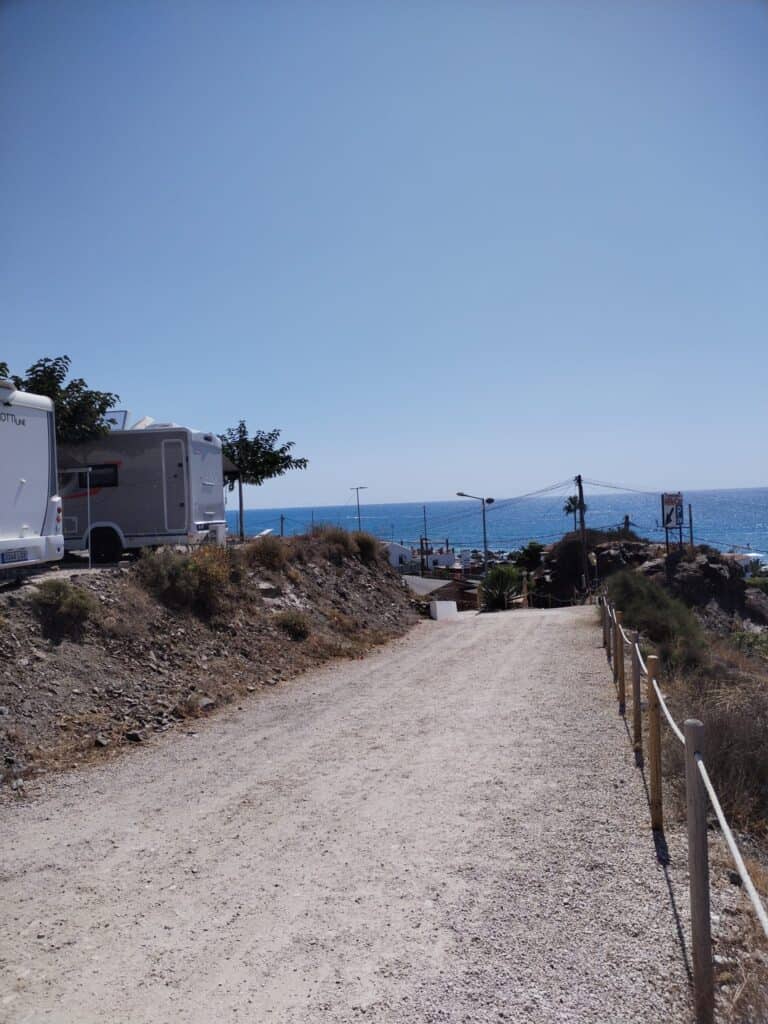
For overwintering, the practical things count: pitches of about 50 m² on gravel, XL pitches for vehicles up to about 12 metres, 16 A electricity with a meter, Wi-Fi included, washing machine and dryer, and a service point for emptying and filling up with water. In low season, which is all year except Easter and summer, there's a discount from 30 nights; for details, see rates.
Frequently asked questions
What's the warmest part of Spain for overwintering in a motorhome?
On the mainland, the Málaga and Almería coasts have the mildest winter highs and lows, with an average January high of about 17 °C and nights of 7-8 °C according to AEMET. Almería is drier, while Málaga is a little more humid but greener and with more services.
When does the overwintering season start and end?
Most people arrive between October and November and leave between March and April, before Easter. November and December are the wettest months on the Costa del Sol; from January to March there are usually more runs of sunny days.
Can you spend the winter sleeping on the street in your motorhome?
Parking is allowed as with any vehicle, but town councils can limit the time and ban camping, and on the coast many do. For several weeks, an authorised aire or campsite avoids fines and gives you water, emptying facilities and electricity.
Do you need heating to overwinter in southern Spain?
Yes, especially at night and first thing in the morning: in January the average lows range from 6 to 9 °C on the coast. During the day, with sunshine, you almost never need it. An electric hook-up helps you avoid relying on gas alone.
How long can a British citizen stay?
Since Brexit, British citizens without EU residence are subject to the limit of 90 days in any 180-day period in the Schengen area. It's worth working it out with the European Commission's official tool before planning a long winter stay.
Book your winter in Torrox-Costa
If the eastern Costa del Sol matches what you're looking for, Milucar is a quiet base by the sea for weeks or months. Check availability and book your pitch early, especially if you want a front-row pitch.
 English (UK)
 Español
 Deutsch
 Nederlands
 Français
