
Seeing Torrox comes down to two visits that complement each other: the village, with its Church of La Encarnación, the remains of the Moorish fortress and its whitewashed streets, and the coast, with a lighthouse built on a Roman site, a flat seafront promenade and seven beaches. The two are about 4 km apart, so one day is enough to see the essentials of both.
We're writing from Torrox-Costa, where Milucar is, with what's worth seeing, how long it takes and how to get around if you arrive by motorhome.
Torrox, a town with two sides
Torrox is in the Axarquía, the eastern district of Málaga province, between Torre del Mar and Nerja. The municipality is split into Torrox Pueblo, the old town on the hillside of the Torrox river valley, and Torrox-Costa, the resort area by the sea. The Costa del Sol Tourist Board boasts about its climate: an average annual temperature of around 18 degrees, thanks to a valley that opens onto the sea and is sheltered by mountains.
That climate explains why Torrox is a favourite winter destination for so many motorhomers. And also why the usual plan is to combine a morning of heritage in the village with an afternoon strolling and eating at a beach bar on the coast.
What to see in Torrox Pueblo
The old town keeps the layout of narrow streets and whitewashed houses typical of Axarquía villages. You can walk around it in a couple of hours, stops included.
Church of Nuestra Señora de la Encarnación
This is the village's main monument. It was built in the 16th century and enlarged in the 17th. Inside, the Mudéjar timber roof framework stands out; outside, the rectangular tower topped with a pyramid-shaped spire, visible from almost anywhere in the old town.
El Portón, El Torreón and the Moorish legacy
Torrox still has remains of its Moorish fortress and of the wall that once surrounded the town. The most recognisable spots are El Portón and El Torreón. Don't expect a complete castle: these are fragments built in among the houses, and the fun is coming across them as you wander.
Plaza de la Constitución
This is the heart of village life. Locals come here for tapas or a café con leche, and it's a good spot for a mid-morning break before carrying on through the streets.
Casa de la Moneda and historic buildings
The Casa de la Moneda, also known as the Palacio de la Aduana, is an 18th-century building that recalls Torrox's former commercial importance. It's privately owned, so you can only see it from outside. On the same walk you can look out for other buildings mentioned by the Costa del Sol Tourist Board:
- The façade of the former San José hospital, from the 16th century.
- The Palacio de la Joya and the La Granja aqueduct, from the 19th century.
- The Casa de la Hoya, where King Alfonso XII stayed during his visit to the Axarquía in 1884.
- The old San Rafael sugar mill, a reminder of the sugar-cane era.
Miniatures Museum (Museo de las Miniaturas)
The Costa del Sol Tourist Board lists it among the town's sights, and it's a good extra if you have children with you or get caught by a rainy day. Check the opening hours at the tourist office before you go, as they can change with the season.

What to see in Torrox-Costa
The Torrox coastline runs to about nine kilometres. It's completely flat along the promenade, which is welcome if you're cycling or travelling with older people.
The lighthouse and the Roman site
If you only have an hour on the coast, head to the lighthouse. It's one of the few lighthouses in Málaga province open to the public for cultural use, and it stands right in the middle of the Roman site of El Faro, the remains of a settlement that flourished between the 1st and 4th centuries. Next to it begins stage 4 of the Gran Senda de Málaga (GR 249), which runs along the coast from Torrox to Nerja: an easy 7.3 km or so.
It's also the westernmost of the province's six lighthouses. At sunset, the viewpoint next to the building is one of the best spots in town to watch the sun go down over the sea.

Calaceite watchtower and Huit beacon tower
The Calaceite watchtower and the Huit beacon tower were built in the 15th century as part of the coastal defence system. The Calaceite tower stands on a headland to the east, above the Mazagarrobo cove, and can be seen from the coastal path.
The promenade and the beaches
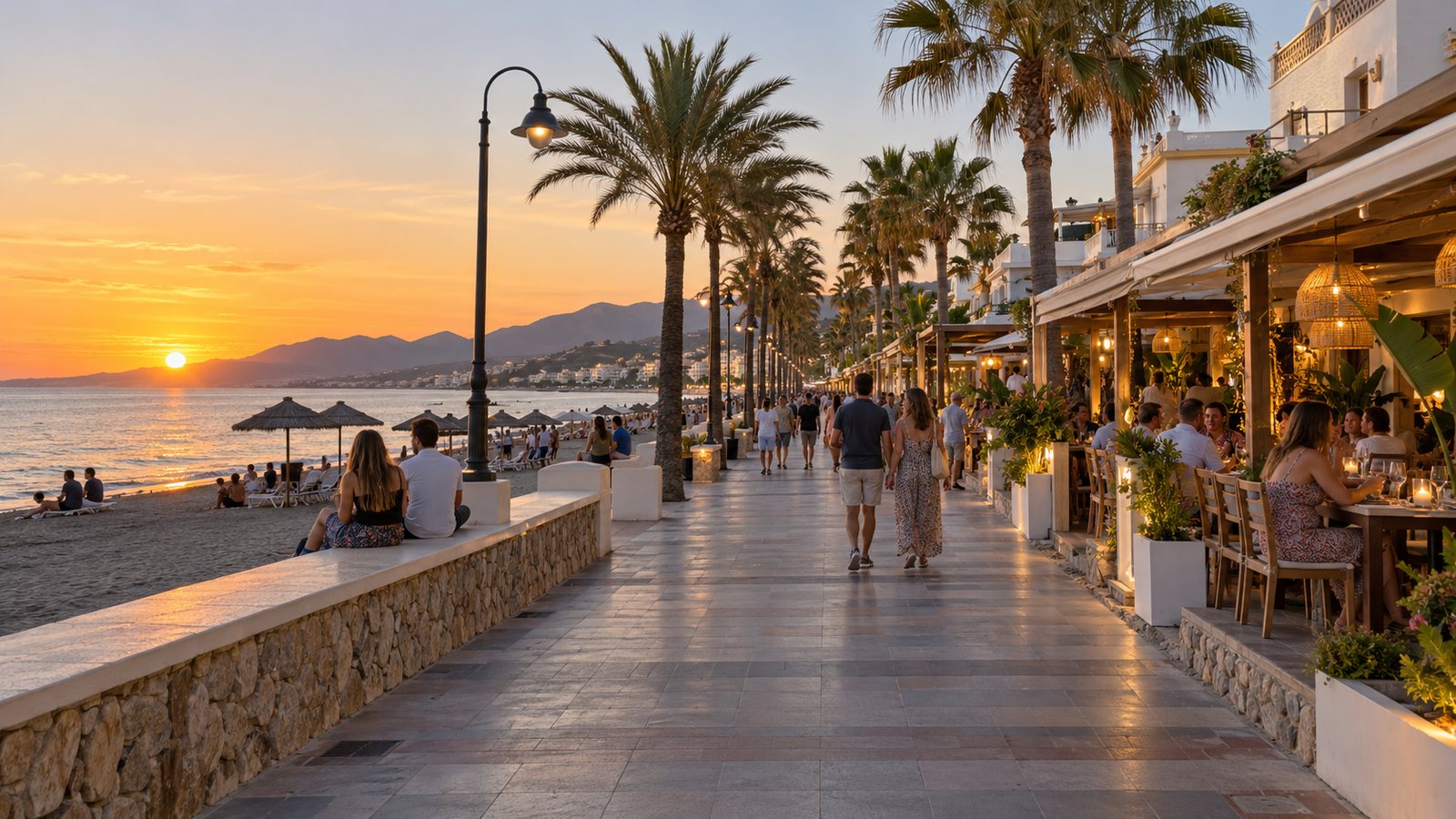
The Torrox-Costa promenade is long, flat and lined with restaurants and beach bars specialising in fresh fish. The best-known beaches are Ferrara, El Morche and El Peñoncillo, and there are quieter coves towards Nerja, such as Calaceite, Mazagarrobo and Wilches. Next to the lighthouse is the dog beach, where dogs can run off the lead and swim.
What to see in Torrox at a glance
| Place | Picnic | From Milucar | Time needed |
|---|---|---|---|
| Lighthouse and Roman site | Coast | About 2 km (on foot along the coast or by bike) | 45 min – 1 hr |
| Promenade and beaches | Coast | Beach under 100 m away; centre about 2 km | As long as you like |
| Calaceite watchtower | Coast, towards Nerja | About 2-3 km along the coastal path | 1 hr there and back |
| Church of La Encarnación | Village | About 6 km, 10 min by car | 20-30 min |
| Old town, El Portón and El Torreón | Village | About 6 km | 1-2 hrs |
| Miniatures Museum (Museo de las Miniaturas) | Village | About 6 km | 30-45 min |
Torrox festivals through the year
If your visit coincides with one, it changes the village experience completely. These are the ones highlighted by the Costa del Sol Tourist Board (exact dates change every year):
- Carnival, around February, with satirical singing groups (chirigotas) and fancy-dress balls.
- May Crosses (Cruces de Mayo), with the courtyards of the houses decorated with flowers, embroidered shawls and lace cloths.
- Noche de San Juan (Midsummer's Eve) (23 June), with the burning of the júas (effigies) and the tradition of walking down from the old town to the river.
- Fiesta de la Candelaria, in September, when many locals head out to the country farmhouses to eat and dance around bonfires.
- October Fair (Feria), usually in the first week of the month, with the procession of the patron saints, the Virgen de las Nieves and San Roque.
- Día de las Migas (Migas Day), on the Sunday before Christmas: the village's big food festival, dedicated to this bread-based dish.
The Día de las Migas falls right in the winter season, so you may well catch it if you spend December on the coast.
From Milucar: getting around Torrox
Milucar is in Torrox-Costa, on the N-340 coast road (exit 940 of the A-7), with the beach less than 100 metres away and the centre of Torrox-Costa about 2 km away. From here:
- To the coast and the lighthouse, on foot or by bike. It's about 2 km west along the shore and the promenade. It's the obvious walk for your first day.
- To the village, by car or taxi. It's about 6 km and around 10 minutes. The old town has narrow, steep streets, so it's no place to take a motorhome: leave it on your pitch and go up in a small vehicle.
- By public transport. The bus stops right outside Milucar on the coast road, and ALSA buses run from Torrox-Costa bus station to Málaga and Granada. Check timetables and routes on the ALSA website.
To get here by motorhome, our access page has step-by-step directions from the A-7 and the N-340.
Torrox as a base for your motorhome trip
Torrox sits in the middle of the eastern Costa del Sol: Nerja is about 10 minutes away, Frigiliana about 20, Cómpeta about 30 and Málaga about 45. That makes it a good fixed base for day trips without moving the vehicle every day.

At Milucar you'll find gravel pitches of about 50 m² and XL pitches for vehicles up to about 12 metres, 16 A electric hook-up with a CEE plug (paid by consumption), a service point for emptying grey water and chemical toilets, Wi-Fi included, showers, washing machine and tumble dryer. The aire is open 365 days a year, and in the low season there's a discount from 30 nights. You'll find it all under facilities and, for day-trip ideas, under the area.
Frequently asked questions about what to see in Torrox
How much time do you need to see Torrox?
One day covers the essentials: the morning in the village and the afternoon on the coast, with the lighthouse and the promenade. If you want to add the coastal path towards Nerja or a lazy afternoon on the beach, allow two days.
What's the difference between Torrox and Torrox-Costa?
They're two parts of the same municipality, about 4 km apart. Torrox Pueblo is the old town, of Moorish origin, inland; Torrox-Costa is the area with the beaches, promenade, restaurants and holiday accommodation.
Can you visit the Torrox lighthouse?
Yes, it's one of the few lighthouses in the province open to the public for cultural use, and the remains of the Roman site can be seen around it. Opening hours vary through the year, so check them with the Torrox tourist office before you go.
Can I drive my motorhome up to Torrox Pueblo?
It's not advisable: the old town has narrow, very steep streets. The practical option is to leave the motorhome at an aire on the coast and go up by car or taxi.
When is the best time to visit Torrox?
Any time. Winter is mild and quiet, ideal for walking and hiking; spring and autumn combine good weather with fewer people; summer is beach and festival season, livelier and busier.
Come and discover Torrox at your own pace
If you want to see Torrox without rushing, with the beach a step away and the lighthouse a short walk away, park up at Milucar and explore from here. Check availability and book your pitch; remember that the minimum stay when booking in advance is two nights.
 English (UK)
 Español
 Deutsch
 Nederlands
 Français
